Tag: meditation

  • Practices for Loving Your Reflection in the Mirror

    For many of us, the mirror has never felt like a neutral place.

    It can feel like a scoreboard. A place where flaws get counted. A moment where the inner critic clears its throat and starts listing everything that feels wrong.

    And if that resonates, I want you to know this first: You are not failing at self love because the mirror feels hard. You are human.

    Loving your reflection is not about forcing confidence or pretending you feel beautiful when you do not. It is about slowly changing the relationship you have with the person looking back at you.

    This is not about fixing your appearance. It is about softening how you see yourself.

    Why the Mirror Can Feel So Charged

    Most of us were taught to look at ourselves with judgment long before we ever chose it.

    We learned to scan for what needs correcting. We learned to compare. We learned that our worth was somehow tied to how acceptable we appeared.

    So when you stand in front of a mirror and feel discomfort, shame, or distance, it is not because you are doing something wrong. It is because you learned to see yourself through a critical lens.

    The practices below are not about jumping straight to love. They are about building safety first.

    Because love grows where safety exists.

    Practice 1. Start With Neutral Presence

    If loving your reflection feels impossible, begin with neutrality.

    Stand in front of the mirror and simply notice yourself without commentary. No praise. No criticism. Just presence.

    You might silently say, This is my face today. This is my body today.

    If your mind wants to judge, gently bring it back to noticing. This is not about stopping thoughts. It is about not following them.

    Neutral presence is often the first act of kindness.

    Practice 2. Soften Your Gaze

    We tend to look at ourselves harshly.

    Tight eyes. Scanning eyes. Eyes looking for proof of failure.

    Instead, try softening your gaze as if you were looking at someone you care about.

    Let your eyes relax. Let your breath slow. Let your shoulders drop.

    This physical shift matters. Your nervous system responds to how you look at yourself.

    A softer gaze sends a message of safety.

    Practice 3. Speak to the Person, Not the Appearance

    Rather than commenting on how you look, speak to who you are.

    Try placing a hand on your chest and saying something simple like, I see you. I know you are trying. You have carried a lot.

    This practice moves the focus from evaluation to recognition.

    You are not an object to be assessed. You are a person to be acknowledged.

    Practice 4. Choose One Point of Appreciation That Is Not Visual

    Loving your reflection does not have to start with appearance.

    Instead, choose something about yourself that you respect or appreciate that has nothing to do with how you look.

    Maybe it is your resilience. Your tenderness. Your ability to keep going even when it is hard.

    As you look at yourself, gently say, This is the face of someone who has survived. This is the body of someone who has shown up.

    Over time, this builds a bridge between who you are and how you see yourself.

    Practice 5. Use the Mirror as a Place of Return

    The mirror can become a ritual space rather than a battleground.

    Once a day, even for thirty seconds, stand in front of it and ask, What does this part of me need right now?

    Not what needs fixing. Not what needs changing. What needs care.

    Sometimes the answer will be rest. Sometimes compassion. Sometimes nothing at all.

    Let the mirror become a place where you check in, not tear down.

    When Loving Your Reflection Feels Too Far Away

    Some days, even these practices will feel like too much.

    On those days, remember this.

    You do not have to love your reflection to be worthy of kindness. You do not have to feel beautiful to deserve gentleness. You do not have to arrive at confidence to be enough.

    Self love is not a destination. It is a relationship. And relationships grow through consistency, not pressure.

    If today all you can offer yourself is neutrality, that is enough. If all you can manage is not being cruel, that is still progress.

    The mirror will meet you where you are.

    A Gentle Closing Invitation

    Next time you pass a mirror, pause for one breath. Just one. Let it be a moment of return rather than judgment.

    You are not required to adore what you see. Only to meet yourself with a little more kindness than before.

    That is how the relationship begins.

  • Creating a Self-Love Altar: A Sacred Space for Daily Connection

    Creating a Self-Love Altar: A Sacred Space for Daily Connection

    A self love altar does not need to be elaborate, expensive, or aesthetically perfect to be meaningful.

    At its heart, an altar is simply a space that reminds you to return to yourself.

    In a world that constantly pulls our attention outward, a self love altar becomes a quiet invitation inward. It is a place where you pause, breathe, and remember that you are worthy of care, presence, and tenderness, exactly as you are.

    For many women, especially those who have spent years caring for others or pushing through exhaustion, creating a sacred space for self connection can feel unfamiliar at first. But that unfamiliarity is often a sign that it is needed.

    This is not about doing a ritual correctly. It is about creating a relationship with yourself that feels safe and supportive.


    What a Self Love Altar Really Is

    A self love altar is not about worship. It is about remembrance.

    It is a visual and energetic reminder that you matter. That your inner world deserves attention. That self love is not something you earn after productivity or perfection, but something you practice daily in small, meaningful ways.

    Your altar can hold whatever helps you feel grounded, seen, and connected. It can change over time. It can be messy. It can be simple.

    There is no wrong way to create one.


    Choosing the Location

    Start by choosing a place that feels gentle and accessible.

    This could be a corner of your bedroom, a small shelf, a nightstand, a desk, or even a windowsill. It does not need to be permanent or visible to others. This space is for you.

    Ask yourself where you naturally pause or where you would like to pause more often.

    The most important thing is that it feels safe and inviting, not like another obligation.


    What to Place on Your Altar

    Let your altar reflect you.

    Here are a few ideas to guide you, not rules to follow.

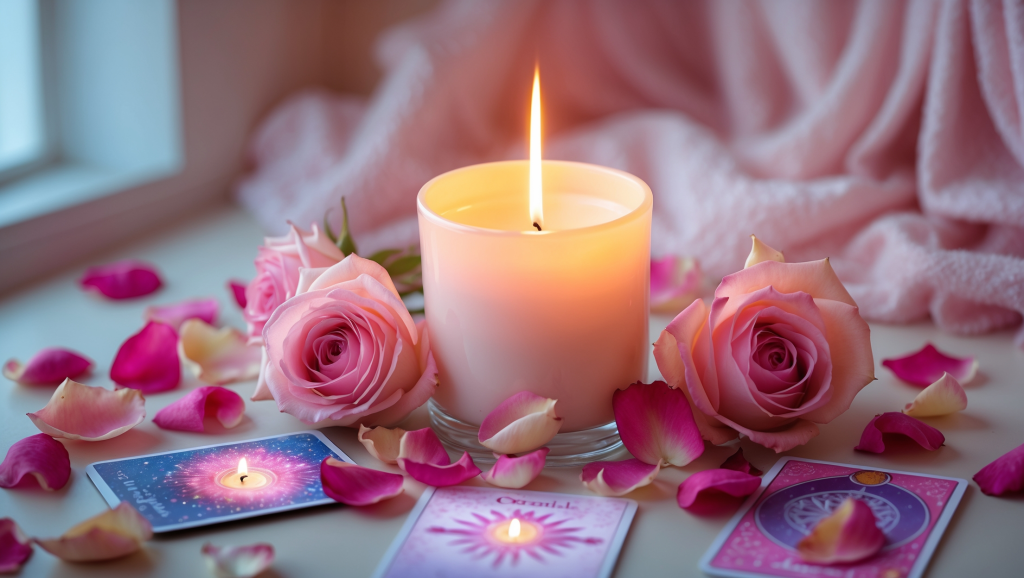
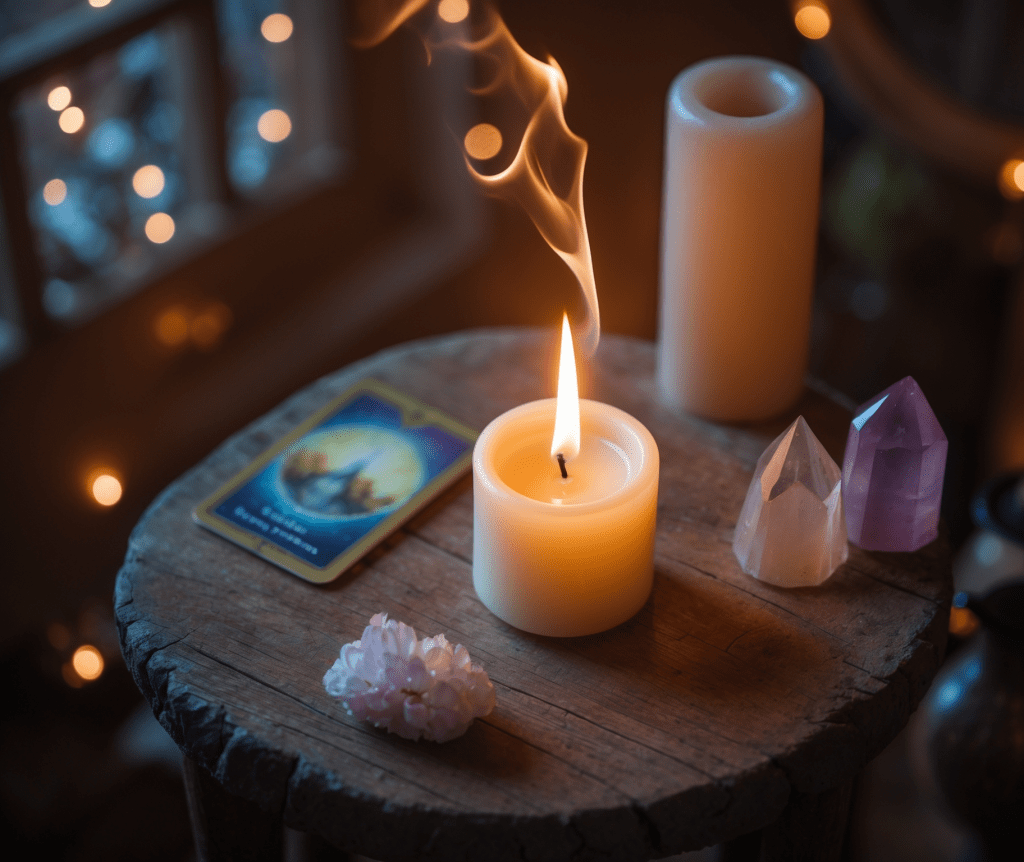
    Oracle or Tarot Cards

    Many people like to place a card of the day or week on their altar. Choose one that feels supportive or reflective of what you are moving through. Let it be a quiet companion rather than a message you must decode.

    A Candle

    A candle represents presence and intention. Lighting it, even for a moment, can signal to your nervous system that it is safe to slow down.

    Natural Elements

    Crystals, stones, feathers, flowers, or leaves can help ground your energy. Rose quartz or rhodonite are often associated with compassion and emotional healing, but trust what you feel drawn to.

    Personal Objects

    Photos, jewelry, small keepsakes, or written affirmations can anchor your altar in your lived experience. These items can remind you of love, resilience, or parts of yourself you want to honor.

    A Journal or Pen

    Keeping a journal nearby makes it easier to reflect when something arises. This is not about writing pages each day. Sometimes one honest sentence is enough.


    Using Your Altar as a Daily Practice

    Your self love altar does not require long rituals.

    In fact, it works best when it fits naturally into your life.

    You might light a candle and pull an oracle card in the morning. You might pause there in the evening and ask yourself how you showed kindness to yourself that day. You might simply rest your hand on your heart and take a few slow breaths.

    These moments may seem small, but they are powerful. They teach your body and mind that self connection is allowed and available.

    Self love grows through repetition, not intensity.


    When Resistance or Guilt Shows Up

    It is common to feel resistance when creating a self love altar.

    You might think you do not have time. You might feel silly or indulgent. You might wonder if you are doing it right.

    These thoughts are not signs that you should stop. They are often signs that you are touching something tender.

    If guilt arises, gently remind yourself that caring for yourself does not take love away from anyone else. It makes more of it possible.

    Your altar is not another task. It is a place of return.


    Let Your Altar Evolve With You

    Your needs will change, and your altar can change with them.

    Some seasons call for grounding. Others call for softness. Some call for rest. Others for courage.

    Allow your altar to reflect where you are, not where you think you should be.

    This flexibility is part of self love too.


    A Gentle Invitation

    If you would like to begin today, start small.

    Clear a space.
    Choose one object that feels meaningful.
    Take one breath with intention.

    That is enough.

    A self love altar is not about creating something beautiful for others to see. It is about creating a space where you can meet yourself honestly and kindly.

    And that meeting, even for a moment, is sacred.