
Blog

  • How to Use Oracle Cards to Deepen Your Self-Love Practice

    Self-love isn’t something you master once and then move on from.

    It’s a relationship — one you return to again and again.

    Some days it feels easy and natural. Other days it feels distant, like you’ve forgotten how to be gentle with yourself.

    That’s where simple spiritual tools can help guide you back.

    Oracle cards are one of the most beautiful ways to reconnect with your inner voice. They offer reflection, insight, and gentle reminders of truths your heart may already know.

    When used with intention, oracle cards become more than just guidance — they become a sacred pause in your day.

    A moment where you come home to yourself.

    Let’s explore how to use oracle cards as a powerful tool for deepening your self-love practice.


    Why Oracle Cards Are Powerful for Self-Love

    Oracle cards are not about predicting your future.

    They’re about helping you listen inward.

    Each card offers a message that can act as a mirror, reflecting emotions, thoughts, and truths that may be sitting just beneath the surface.

    When you approach oracle cards with openness rather than expectation, they can help you:

    • Slow down and check in with yourself
    • Recognize patterns in your thoughts and emotions
    • Cultivate compassion toward your inner world
    • Strengthen your intuition
    • Create intentional moments of reflection

    In many ways, oracle cards simply give your inner wisdom a voice.

    And when you’re practicing self-love, that voice matters.


    Step 1: Create a Gentle Ritual

    Self-love deepens when you create moments that feel intentional.

    Pulling an oracle card doesn’t need to be complicated. What matters most is the energy you bring to the moment.

    You might begin by:

    • Taking a few slow breaths
    • Lighting a candle
    • Making a cup of tea
    • Sitting quietly for a minute before drawing your card

    This small ritual signals to your nervous system that it’s safe to slow down.

    And when you slow down, you can actually hear yourself.


    Step 2: Ask a Supportive Question

    Instead of asking predictive questions like “What will happen to me?”, try asking questions that encourage reflection and self-understanding.

    For example:

    • What message does my heart need today?
    • Where can I offer myself more compassion right now?
    • What part of myself is asking to be seen today?

    These kinds of questions invite growth instead of pressure.

    They guide you toward self-awareness rather than external answers.


    Step 3: Draw One Card and Reflect
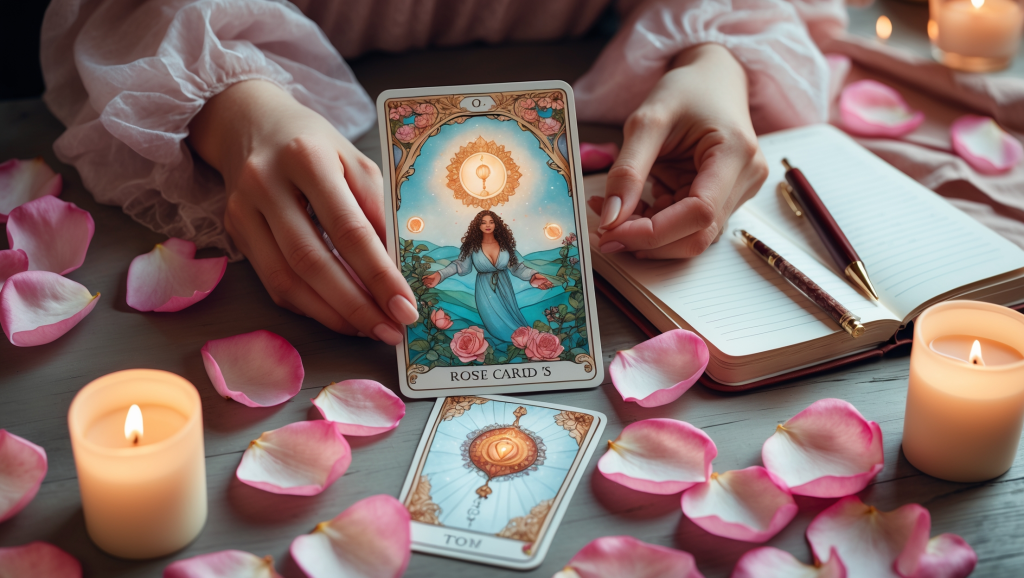
    You don’t need complicated spreads to receive meaningful insight.

    Often, one card is enough.

    When you draw a card, pause and notice your first reaction.

    Ask yourself:

    • What stands out to me in the image or message?
    • How does this relate to what I’m currently feeling?
    • What might this card be gently encouraging me to see?

    Oracle cards work best when you allow space for your own interpretation.

    Your intuition is part of the message.


    Step 4: Journal With the Card

    Journaling is one of the most powerful ways to deepen the message you receive.

    Instead of simply reading the card and moving on, spend a few minutes writing about what it brings up for you.

    You might write about:

    • Emotions the card stirred within you
    • A memory or situation it reminds you of
    • A new perspective it offers
    • One small action you could take today based on its message

    This reflection transforms the card from inspiration into personal insight.


    Step 5: Carry the Message Into Your Day

    Self-love practices are most powerful when they move beyond the moment.

    After drawing your card, consider how you can live its message today.

    For example:

    If your card speaks about compassion, you might practice gentler self-talk.

    If your card speaks about rest, you might give yourself permission to pause.

    If your card speaks about courage, you might take one small step you’ve been avoiding.

    The card becomes a quiet guide — not something you rely on, but something that reminds you of your own wisdom.


    A Simple Daily Oracle Practice

    If you’re new to working with oracle cards, try this gentle daily ritual:

    1. Take three slow breaths
    2. Ask: What does my heart need today?
    3. Draw one card
    4. Write one reflection in your journal
    5. Carry the message with you throughout the day

    The entire practice can take less than five minutes.

    But the self-awareness it creates can ripple through your whole day.


    A Final Reminder

    Oracle cards don’t hold your power.

    You do.

    They simply help you pause long enough to hear the quiet voice inside you — the one that already knows you are worthy of love, compassion, and care.

    Every time you pull a card with intention, you are practicing something deeper than guidance.

    You are practicing listening.

    And listening to yourself with kindness is one of the purest forms of self-love there is.
  • Healing the Inner Critic: 3 Steps to Cultivating Inner Peace

    There is a voice inside many of us that sounds like truth but feels like pressure.

    It comments on what you did.
    It critiques what you said.
    It replays what you should have done differently.

    It tells you to try harder.
    Be better.
    Do more.

    We call this voice the inner critic.

    And while it may have developed to protect you, motivate you, or help you belong, it rarely creates the peace you are actually longing for.

    Inner peace does not come from finally satisfying the critic.
    It comes from changing your relationship with it.

    Here are three gentle steps to begin healing the inner critic and cultivating a steadier sense of peace within.


    Step One: Notice the Voice Without Becoming It

    The first step is awareness.

    Noticing when the critic is speaking instead of unconsciously fusing with it.

    The inner critic often uses absolute language:

    • “You always mess this up.”
    • “You should be further along.”
    • “Everyone else is doing better.”
    • “You’re too much.”
      Or
      “You’re not enough.”

    When you hear that tone, pause.

    Instead of arguing with it or trying to silence it, simply say to yourself:

    “Oh. That’s my inner critic.”

    This small shift creates space.

    You are no longer the voice.
    You are the one hearing it.

    Awareness softens identification.
    And space is the beginning of peace.


    Step Two: Get Curious About What It’s Protecting

    The inner critic is often a protector in disguise.

    It learned, at some point, that being harsh might keep you safe.

    Safe from rejection.
    Safe from failure.
    Safe from embarrassment.
    Safe from being hurt again.

    Rather than shaming the critic for being loud, try asking:

    What is this voice afraid would happen if I stopped pushing myself?

    What is it trying to prevent?

    Often beneath the criticism is fear.

    Fear of not being loved.
    Fear of not being enough.
    Fear of being seen and found lacking.

    When you approach the critic with curiosity instead of combat, something shifts.

    You move from internal war to internal dialogue.

    Peace grows when parts of you feel heard instead of exiled.


    Step Three: Introduce a Compassionate Countervoice

    Healing the inner critic does not mean erasing it overnight.

    It means building a second voice that is steady, kind, and rooted in truth.

    This compassionate voice might say:

    “I am allowed to be learning.”
    “I can make mistakes and still be worthy.”
    “My value is not determined by my productivity.”
    “I am doing the best I can with the capacity I have today.”

    At first, this voice may feel unfamiliar.

    The critic might sound louder and more convincing.

    That is okay.

    You are strengthening a new neural pathway.

    You are practicing a new way of relating to yourself.

    Compassion is not indulgence.
    It is regulation.
    It is safety.
    It is self-respect.

    And over time, the compassionate voice becomes more accessible.

    Not because the critic disappears, but because it no longer runs the entire conversation.


    A Gentle Reminder

    You developed your inner critic for a reason.

    It likely helped you survive something.

    There is no need to hate it.

    There is only an invitation to soften its grip.

    Inner peace is not the absence of inner noise.

    It is the presence of kindness within it.

    If it feels supportive, you might ask yourself today:

    When my inner critic speaks, what would it feel like to respond with understanding instead of shame?

    You do not have to silence every harsh thought.

    You only have to begin listening differently.

    And that, too, is healing.

  • Why Self-Love Isn’t Selfish – It’s Sacred

    Somewhere along the way, many of us learned that caring for ourselves comes last.

    After the work is done.
    After everyone else is okay.
    After we’ve earned it.

    And even then, it can feel uncomfortable.

    There’s often a quiet fear underneath self-love.
    If I choose myself, will I be seen as selfish?
    If I say no, will I disappoint someone?
    If I rest, will I fall behind?

    For women especially, self-sacrifice is often praised.
    Overgiving is admired.
    Exhaustion is normalized.

    So when we begin to turn inward with tenderness, it can feel like we’re breaking an unspoken rule.

    But self-love is not selfish.

    It’s sacred.


    Where the Confusion Comes From

    Selfishness is rooted in disregard.
    It says, “Only I matter.”

    Self-love is rooted in respect.
    It says, “I matter too.”

    There is a profound difference.

    When you tend to your own needs, you are not taking something away from others. You are honoring the truth that you are human with limits, with feelings, with capacity that rises and falls.

    Self-love does not mean ignoring others.

    It means not abandoning yourself in the process.

    And many of us have become very skilled at self-abandonment.

    We override our exhaustion.
    We silence our discomfort.
    We swallow our needs to keep the peace.

    Not because we are weak.

    But because somewhere along the way, it felt safer to stay small than to take up space.


    The Sacredness of Turning Inward

    There is something deeply sacred about choosing to care for yourself.

    Sacred does not mean dramatic or spiritual in a grand way.

    It means worthy of reverence.

    When you pause and ask,
    “What do I need right now?”, you are treating your inner world as something that matters.

    When you rest without explaining yourself, you are honoring your body as something wise.

    When you set a boundary, you are protecting something precious.

    You.

    Self-love becomes sacred the moment it shifts from performance to presence.

    It is not about posting affirmations or perfect routines.
    It is about relationship.

    It is about staying with yourself when you are tired, messy, unsure, or overwhelmed.

    That kind of loyalty to your own heart is not selfish.

    It is devotion.


    What Happens When You Don’t Practice Self-Love

    When self-love is dismissed as selfish, something else quietly takes its place.

    Resentment.
    Burnout.
    Emotional withdrawal.
    Numbness.

    You cannot continually pour from an empty place without consequences.

    And tending to yourself does not make you less generous.

    It makes your generosity sustainable.

    There is a difference between giving from overflow and giving from depletion.

    One nourishes.
    The other drains.

    Self-love is what allows you to remain open without collapsing.


    Reclaiming the Word “Selfish”

    It can be helpful to gently examine the fear.

    If someone calls you selfish for resting, what does that stir in you?

    If you imagine disappointing someone by honoring your limit, what story arises?

    Often, the discomfort is not about morality.

    It is about belonging.

    We fear that choosing ourselves will cost us connection.

    But the truth is this:

    Connection that requires you to disappear is not true connection.

    The relationships that are meant for you will not require your exhaustion as proof of love.


    Small Sacred Acts of Self-Love

    Self-love does not have to be grand or visible.

    It can look like:

    • Closing your laptop when your body feels heavy
    • Saying, “I’ll get back to you,” instead of agreeing immediately
    • Drinking water before pushing through
    • Choosing quiet instead of explaining yourself
    • Letting something be unfinished

    These moments may not look impressive from the outside.

    But internally, they are powerful.

    They say, “I am listening.”
    They say, “I am allowed to care for myself.”
    They say, “My needs are not a burden.”

    That is sacred.


    A Gentle Reflection

    If this feels tender, you might sit with this question:

    Where have I mistaken self-respect for selfishness?

    You don’t need to fix anything.

    Just notice.

    Self-love does not ask you to become someone else.

    It asks you to stop leaving yourself behind.

    And that is not selfish.

    It is sacred.

  • How to Reclaim Your Energy From People Pleasing

    People pleasing doesn’t usually start as a flaw.
    It starts as a strategy.

    A way to stay safe.
    A way to keep the peace.
    A way to belong, avoid conflict, or make sure you’re not “too much.”

    For many women, people pleasing is something we learned early. We learned that being agreeable, helpful, accommodating, or easy to be around brought approval and reduced tension. Over time, that lesson can turn into a habit of placing everyone else’s needs ahead of our own even when it costs us our energy, our clarity, and our sense of self.

    If you’re tired, resentful, or disconnected from yourself, it may not be because you’re doing too little. It may be because you’re giving too much away.

    People Pleasing Is an Energy Leak

    When you people please, your energy is constantly flowing outward.

    You’re monitoring others’ reactions.
    You’re anticipating disappointment.
    You’re adjusting yourself to avoid discomfort, yours or theirs.

    Even when nothing is “wrong,” your nervous system stays alert. Am I doing enough? Did I say the right thing? Are they upset with me?

    That kind of vigilance is exhausting.

    And the hardest part is that people pleasing often happens automatically. You may say yes before you’ve checked in with yourself. You may agree even when your body tightens. You may offer reassurance, help, or flexibility without realizing how depleted you already are.

    Reclaiming your energy doesn’t mean becoming cold or uncaring. It means learning how to stay connected to yourself while you’re connected to others.

    The Cost of Abandoning Yourself

    One of the quiet costs of people pleasing is self-abandonment.

    Each time you override your needs, your preferences, or your limits, you send yourself a message, often without realizing it, that your inner experience is less important than keeping others comfortable.

    Over time, this can lead to:

    • chronic fatigue or burnout
    • resentment that feels confusing or shameful
    • difficulty knowing what you actually want
    • a sense of emptiness even when life looks “fine”

    None of this means you’ve failed at self-love. It means you’ve been surviving in a system that rewarded you for disappearing.

    Reclaiming Energy Begins With Awareness

    You don’t need to stop people pleasing all at once. In fact, trying to force that change can create more stress.

    Energy returns first through awareness.

    Start by noticing the moments where your energy shifts. The pause before you say yes. The heaviness after a conversation. The tightness in your chest when you agree to something that doesn’t feel right.

    You don’t need to correct anything yet. Simply noticing is an act of self-connection.

    You might gently ask yourself:
    What am I afraid would happen if I honored myself here?
    What do I feel in my body right now?
    Is this choice expanding me or draining me?

    These questions aren’t meant to pressure you. They’re meant to bring you back into relationship with yourself.

    You’re Allowed to Have Needs Without Explaining Them

    One of the biggest myths that fuels people pleasing is the belief that your needs must be justified.

    That you need a “good enough” reason to rest.
    That your boundaries must be logical or defensible.
    That you owe others access to your energy.

    You don’t.

    You are allowed to need space without a crisis.
    You are allowed to say no without a detailed explanation.
    You are allowed to change your mind.

    When you stop over-explaining, you conserve enormous amounts of energy. Not because you’re being dismissive, but because you’re no longer arguing for your right to exist as you are.

    Small Shifts That Reclaim Energy Gently

    Reclaiming your energy doesn’t require dramatic boundaries or confrontations. Often, it happens through small, internal shifts.

    Pause before responding. Even a breath can create space.
    Practice neutral responses like “Let me think about that” or “I’ll get back to you.”
    Notice when you’re offering more than was asked of you.
    Allow disappointment to exist without rushing to fix it.

    Each of these moments builds trust between you and yourself. And trust is energizing.

    You Are Not Responsible for Everyone’s Comfort

    This can be a hard truth to sit with, especially if you were taught to be responsible for others’ feelings.

    But your job is not to manage everyone’s emotions.
    Your job is not to smooth every edge.
    Your job is not to make yourself smaller so others feel at ease.

    When you stop carrying that responsibility, energy naturally returns. Not all at once, but steadily.

    You begin to feel more present in your body.
    You have more capacity for things that actually nourish you.
    You feel clearer about what’s yours and what isn’t.

    A Gentle Reflection

    If it feels supportive, you might sit with this question:

    Where am I giving energy out of fear instead of choice?

    There’s no need to rush the answer. Even noticing the question is enough.

    Reclaiming your energy is not about becoming someone else. It’s about coming home to yourself one small moment of self-honoring at a time.

    And that, in itself, is a powerful act of self-love.

  • Moving With Love: How Gentle Movement Heals Body Image

    For many women, movement has been tangled up with judgment for a long time.

    Move to fix your body.
    Move to change your shape.
    Move to earn food, rest, or approval.

    When movement is framed this way, it stops being a relationship with the body and becomes a correction. Something to endure. Something to get through. Something loaded with shame.

    It makes sense, then, that for many women, body image struggles don’t ease with more movement. Sometimes they deepen.

    But there is another way to move.
    One that doesn’t ask your body to become something else before it’s allowed care.

    When Movement Becomes a Demand

    If movement has ever felt heavy, fraught, or emotionally charged for you, it’s not because you’re doing it wrong.

    Often, it’s because movement has been tied to messages like:

    • Your body needs fixing
    • You should push past discomfort
    • You’re failing if you don’t keep going
    • Rest is weakness

    Over time, the body learns to brace. To resist. To shut down.

    In that context, it’s hard to feel at home in your body. It’s hard to feel neutral toward it, let alone kind.

    Gentle Movement Is Not About Doing Less

    It’s About Relating Differently

    Gentle movement is not about intensity or performance. It’s about attention.

    It asks different questions:

    • What does my body need right now?
    • Where do I feel tight, tired, or guarded?
    • What would feel supportive instead of demanding?

    Gentle movement doesn’t try to override the body’s signals. It listens to them.

    And that listening is where healing begins.

    How Gentle Movement Supports Body Image

    Body image often improves not because the body changes, but because the relationship changes.

    When you move gently:

    • You learn to notice sensation without judgment
    • You experience your body as responsive rather than resistant
    • You build trust instead of control

    Over time, the body stops being something to manage and starts becoming something you live inside again.

    That shift matters.

    Because body image struggles are rarely about appearance alone. They’re about safety, trust, and belonging in your own skin.

    Movement as Communication, Not Correction

    Gentle movement can be as simple as:

    • Stretching your arms overhead after sitting too long
    • Rolling your shoulders when you notice tension
    • Rocking slowly when you feel unsettled
    • Walking without tracking distance, pace, or outcome

    These are not workouts.
    They’re conversations.

    They say to the body:
    I’m listening.
    I’m here.
    I don’t need you to change to deserve care.

    Letting Go of the “Right Way” to Move

    One of the quiet harms of fitness culture is the idea that there is a correct way to move.

    The right routine.
    The right intensity.
    The right body doing it.

    Gentle movement releases that pressure.

    There is no gold star.
    No optimal version.
    No finish line.

    There is only this moment, and the body you are in.

    A Soft Invitation

    If you’d like to explore this gently, you might try this today:

    Pause and notice where your body feels most tense or tired.
    Move that area slowly, in whatever way feels natural.
    Stop when your body signals it’s enough.

    No mirrors.
    No metrics.
    No fixing.

    Just presence.

    Healing Doesn’t Have to Be Harsh

    Body image does not heal through force.

    It heals through consistency, safety, and care.

    Gentle movement offers your body something many of us were never taught to give it: respect without conditions.

    You don’t have to love your body today.
    You don’t have to feel confident or grateful or positive.

    You can simply move with it, instead of against it.

    And that is more than enough.

  • The Moon and Self-Love: How to Work With Lunar Cycles to Heal

    The Moon and Self-Love: How to Work With Lunar Cycles to Heal

    For many women, self-love feels like something we are supposed to achieve.

    As if one day we will wake up healed enough, rested enough, gentle enough, and finally feel at peace with ourselves.

    But the body does not work that way.
    The heart does not work that way.
    And neither does healing.

    Healing moves in cycles.
    So does energy.
    So does our capacity for care.

    This is why the moon has always felt like a quiet teacher to me when it comes to self-love.

    The moon never stays the same.
    And yet it is never wrong for being where it is.

    There are nights when it is bright and full, commanding the sky.
    There are nights when it is barely visible, resting in darkness.
    There are nights when it is growing, and nights when it is releasing.

    At no point does the moon rush itself.
    At no point does it apologize for its phase.

    And that, to me, is the heart of self-love.

    Self-Love Is Cyclical, Not Linear

    Many of us learned to think of healing and self-care as linear progress.

    We expect ourselves to feel better and then stay better.
    To learn a lesson once and never struggle with it again.
    To be kind to ourselves consistently, regardless of exhaustion, grief, or change.

    But the truth is, our inner lives move more like the moon than a straight line.

    Some days we feel open, reflective, and capable of compassion.
    Other days, everything feels tender, raw, or heavy.
    Some seasons invite growth and outward energy.
    Others ask for rest, quiet, and turning inward.

    Self-love becomes much more accessible when we stop asking ourselves to stay in one phase and instead learn how to honor the one we are in.

    The New Moon: Rest Without Explanation

    The new moon is a time of darkness and stillness. The moon is there, but unseen.

    In self-love, this phase often mirrors moments when you feel low, quiet, or inward. When energy is scarce. When you do not feel inspired to reflect, share, or “do the work.”

    Many women struggle here because we have been taught that rest must be earned or justified.

    But the new moon does not prove its worth before going dark.
    It does not explain itself.

    Self-love during the new moon is about permission.

    Permission to rest without producing insight.
    Permission to pause without a plan.
    Permission to be unseen without disappearing.

    A gentle question for this phase might be:
    What would it feel like to let myself be quiet right now?

    The Waxing Moon: Gentle Growth Without Pressure

    As the moon begins to grow, light slowly returns.

    This phase aligns with curiosity and gentle intention. Not big goals or transformation, but small openings.

    In self-love, waxing energy may show up as:
    Wanting to try a new practice.
    Noticing where kindness feels possible.
    Beginning again after a period of depletion.

    This is not the time for force.

    Growth here is slow and incremental. The moon does not jump from darkness to fullness. It builds light patiently.

    Self-love in this phase sounds like:
    “I can take one small step.”
    “I do not need to rush.”
    “I can listen as I go.”

    A gentle question for this phase might be:
    What feels supportive to explore right now, without obligation?

    The Full Moon: Awareness Without Judgment

    The full moon brings illumination. Things come into view.

    In self-love work, this often looks like heightened awareness. Emotions may feel closer to the surface. Patterns become clearer. Needs speak more loudly.

    This is where many women turn on themselves.

    They notice what hurts and immediately want to fix it.
    They see their struggles and feel ashamed for still having them.

    But the full moon does not edit what it reveals. It simply shines.

    Self-love during the full moon is about witnessing without judgment.

    Letting what is true be seen without deciding what it means about your worth.
    Allowing feelings to exist without demanding resolution.

    A gentle question for this phase might be:
    What is asking to be acknowledged, not solved?

    The Waning Moon: Release Without Self-Punishment

    As the moon begins to wane, light slowly recedes. This is a time of letting go.

    In self-love, waning energy supports release. Releasing expectations. Releasing self-criticism. Releasing roles or habits that no longer feel sustainable.

    This is not about self-improvement. It is about softening your grip.

    Many women try to release through force. Through harsh boundaries with themselves. Through self-judgment disguised as motivation.

    But the moon does not tear its light away. It releases gradually.

    Self-love here means allowing yourself to loosen without blame.

    You might ask:
    What can I set down, even temporarily, to feel a little more ease?

    Working With the Moon Instead of Against Yourself

    You do not need to track the moon perfectly to work with its wisdom.

    This is not about following rules or rituals correctly.
    It is about noticing rhythm.

    Noticing when you need rest instead of reflection.
    Noticing when awareness feels helpful and when it feels overwhelming.
    Noticing when growth feels nourishing and when it feels like pressure.

    The moon reminds us that there is no single correct way to be in relationship with ourselves.

    Some days self-love looks like journaling or meditation.
    Some days it looks like going to bed early.
    Some days it looks like doing less and expecting less of yourself.

    All of it belongs.

    A Closing Reflection

    If you want to begin relating to self-love more cyclically, you might sit with this question:

    If my inner life moved like the moon, what phase am I in right now, and what does that phase need?

    You do not need to change anything immediately.

    Just noticing is enough.

    Self-love does not require constant light.
    It does not require progress without pause.
    It does not require you to be whole before you are worthy of care.

    Like the moon, you are allowed to change.
    You are allowed to ebb and return.
    You are allowed to be exactly where you are.

    And that, too, is part of the healing.

  • Reclaiming Worthiness: How to Remember You Are Enough

    Reclaiming Worthiness: How to Remember You Are Enough

    There are many ways women come to the question of worthiness.

    Sometimes it arrives quietly, as a dull ache in the background of daily life.
    Sometimes it shows up as exhaustion, or burnout, or a harsh inner voice that never seems satisfied.
    And sometimes it becomes visible only when everything slows down and there’s nowhere left to hide.

    If you’ve ever felt like you need to do more, be better, or prove yourself before you’re allowed to rest, feel at peace, or treat yourself kindly, you’re not imagining things.

    You learned this somewhere.

    And learning something is not the same as choosing it.

    Worthiness Is Often Taught as Conditional

    Many of us grew up in environments where love, safety, or approval felt conditional.

    You may have learned that you were worthy when you were:

    • productive
    • helpful
    • agreeable
    • successful
    • quiet
    • strong

    And that when you struggled, slowed down, or needed care, something about you was suddenly too much or not enough.

    Over time, those experiences can shape a belief that worthiness must be earned.
    That rest is a reward.
    That kindness toward yourself must be justified.

    This belief doesn’t usually announce itself clearly.
    It hides in habits, in self-talk, in the way you push yourself past your limits without even noticing.

    Why “Just Love Yourself” Rarely Helps

    You may have been told to “just love yourself more” or “work on your self-worth.”

    But for many women, those suggestions land as pressure rather than support.

    Because if worthiness feels distant or inaccessible, being told to feel worthy can actually reinforce the belief that you’re failing at yet another thing.

    Reclaiming worthiness is not about forcing a new belief or repeating affirmations you don’t feel connected to.

    It’s about gently remembering what was already there before conditions were attached to it.

    Worthiness Isn’t Something You Build. It’s Something You Remember.

    Here’s the truth that often gets overlooked:

    You don’t need to become worthy.

    You don’t need to improve yourself into worthiness.

    You don’t need to heal everything, resolve everything, or understand everything first.

    Worthiness is not a destination.
    It’s not a personality trait.
    It’s not a reward for good behavior.

    Worthiness is the quiet truth of your existence.

    And while it may feel buried under years of conditioning, stress, and self-criticism, it has never actually left.

    What Remembering Worthiness Can Look Like

    Remembering worthiness doesn’t always feel empowering or dramatic.

    Often, it looks very small.

    It might look like:

    • stopping before you’re completely depleted
    • choosing rest without explaining yourself
    • speaking to yourself with less cruelty than usual
    • allowing a feeling without trying to fix it
    • letting “good enough” be enough

    These moments may not feel like breakthroughs.
    But they are acts of remembering.

    Each time you choose kindness over punishment, you loosen the grip of the belief that you must earn your right to exist as you are.

    When Worthiness Feels Out of Reach

    There may be days when none of this resonates.

    Days when your inner critic is loud.
    Days when self-compassion feels fake.
    Days when worthiness feels like a concept meant for other people.

    On those days, remembering worthiness doesn’t mean forcing yourself to feel better.

    It might simply mean not adding more harm.

    It might mean saying:
    “I’m struggling today, and that doesn’t make me less deserving of care.”

    That, too, is an act of remembering.

    A Gentle Reflection

    If it feels supportive, you might sit with this question — not to answer perfectly, but to notice what arises:

    Where did I learn that I had to earn kindness, rest, or love?

    There is no need to judge the answer.
    No need to resolve it.
    Awareness alone is enough to begin softening what no longer serves you.

    Coming Back to Yourself, Slowly

    Reclaiming worthiness is not a one-time realization.

    It’s a relationship.
    One you return to again and again, especially when old patterns resurface.

    Some days you’ll feel more connected to it.
    Other days you’ll forget.

    Both are part of being human.

    If you’re looking for a gentle place to practice remembering — without pressure or performance — you’re always welcome to join my free community, The Self-Love Scribe Women’s Circle.

    It’s a quiet space for women who are learning to be kinder to themselves in small, doable ways.

    And whether you join or not, I want you to know this:

    You are not behind.
    You are not failing.
    You are not asking for too much.

    You are enough — not because you’ve proven it, but because you’re here.

    One breath.
    One moment.
    One gentle return at a time. 🌿

  • The 5 Pillars of Self-Love: A Guide to Coming Home to Yourself

    The 5 Pillars of Self-Love: A Guide to Coming Home to Yourself

    A Guide to Coming Home to Yourself

    Self-love gets talked about like it’s a finish line.
    Like one day you’ll finally arrive healed, confident, and unshakable, and then the work will be done.

    But self-love doesn’t work like that.

    It’s not a destination.
    It’s a relationship.

    One that shifts, deepens, and sometimes falters.
    One that asks to be tended, not perfected.

    These five pillars are not rules to follow or boxes to check.
    They are gentle anchors you can return to whenever you feel disconnected from yourself.

    You don’t need to do all of them at once.
    You don’t need to do them “right.”

    You’re allowed to start exactly where you are.


    Pillar 1: Awareness Without Judgment

    Self-love begins with noticing.

    Noticing your thoughts.
    Your emotions.
    Your patterns.
    Your limits.

    Without immediately criticizing yourself for what you see.

    So many of us were taught to meet ourselves with judgment first.
    Why am I like this?
    What’s wrong with me?
    I should be better by now.

    Awareness without judgment sounds different.

    It sounds like:
    This feels hard.
    I’m tired.
    Something in me needs care.

    You don’t need to analyze or fix what you notice.
    Simply seeing yourself clearly and kindly is an act of self-love.


    Pillar 2: Compassion Over Criticism

    You do not need to be healed, motivated, productive, or emotionally regulated to deserve compassion.

    Self-love does not require you to earn kindness through effort or improvement.

    It means learning to respond to yourself the way you would respond to someone you love.

    When you struggle, instead of asking,
    Why can’t I get it together?

    You might ask,
    What am I carrying right now?

    Compassion doesn’t remove accountability.
    It removes cruelty.

    And cruelty has never been an effective teacher.


    Pillar 3: Boundaries as Self-Respect

    Self-love is not only about softness.
    It’s also about protection.

    Boundaries are not walls.
    They are acts of self-respect.

    They sound like:
    I can’t do that right now.
    I need rest.
    This doesn’t feel good for me.

    For many women, boundaries bring guilt.
    Fear of disappointing others.
    Fear of being seen as selfish or lazy.

    But every boundary you set is a way of saying,
    My needs matter too.

    Self-love grows when you stop abandoning yourself to keep the peace.


    Pillar 4: Listening to Your Body and Inner Wisdom

    Your body is not something to push through or override.

    It carries information.
    Signals.
    Truth.

    Fatigue, tension, numbness, overwhelm.
    These are not personal failures.
    They are communication.

    Self-love means listening instead of arguing with yourself.

    Instead of asking,
    How do I force myself to keep going?

    You might ask,
    What is my body asking for right now?

    Rest is not a reward.
    It is a requirement.


    Pillar 5: Gentle Returning

    This is not about discipline.
    It is not about streaks, routines, or doing something every day.

    Self-love does not break when you miss a day.
    It breaks when you punish yourself for missing one.

    Gentle returning means:
    Coming back after you disappear.
    Choosing yourself again after self-criticism.
    Letting yourself re-enter without shame.

    You are not behind.
    You have not failed.
    You are still welcome here.

    Trust is built not by never leaving, but by always allowing yourself to come back.


    Bringing the Pillars Together

    Self-love is not loud or performative.
    It is often quiet, ordinary, and deeply human.

    It looks like:
    Speaking to yourself with a little more care.
    Resting without apology.
    Setting one small boundary.
    Listening instead of pushing.
    Returning instead of quitting.

    You don’t have to love yourself perfectly.

    You only have to stay willing to meet yourself with kindness.

    Again and again.

    That is how you come home to yourself.

  • How to Cultivate Confidence Without Perfection

    For a long time, I thought confidence was something you earned after you got everything right.

    After you healed enough.
    After you stopped doubting yourself.
    After you figured out who you were and how to show up without hesitation.

    But real life doesn’t work that way. And neither does confidence.

    If anything, waiting for perfection is one of the quickest ways to stay stuck.

    Confidence Is Not the Absence of Doubt

    One of the biggest myths we carry is that confident people don’t struggle with uncertainty, fear, or self-criticism. They do. The difference is not that doubt disappears. It’s that it no longer gets the final say.

    Confidence isn’t loud certainty. It’s quiet steadiness.

    It’s being willing to show up while still feeling unsure.
    It’s allowing yourself to be seen without demanding that you be flawless first.

    When you stop treating doubt as a problem to eliminate and start treating it as something you can hold with compassion, confidence has room to grow.

    Perfection Is a Moving Target

    Perfection keeps shifting. The moment you reach one version of it, another one appears.

    That’s why confidence built on perfection is so fragile. It depends on constant performance, constant proof, constant improvement.

    Confidence rooted in self-kindness is different.

    It doesn’t ask, “Am I doing this perfectly?”
    It asks, “Can I stay with myself through this?”

    That kind of confidence doesn’t collapse the moment you make a mistake, need rest, or change direction.

    Confidence Grows Through Relationship, Not Achievement

    Confidence is not something you achieve. It’s something you build through relationship.

    Your relationship with your inner voice.
    Your relationship with your body.
    Your relationship with your limits.

    If your inner voice only offers approval when you are productive, capable, or composed, confidence will always feel conditional.

    But when you begin responding to yourself with patience instead of pressure, something shifts.

    You start trusting that you won’t abandon yourself when things get messy.
    You begin to feel safer taking risks.
    You recover more quickly when things don’t go as planned.

    That safety is confidence.

    Gentle Practices That Build Real Confidence

    Here are a few ways to cultivate confidence without chasing perfection.

    Notice How You Speak to Yourself

    Confidence erodes quickly under constant self-criticism. Pay attention to the tone you use with yourself, especially when you are tired or disappointed.

    Ask yourself, “Would I speak this way to someone I love?”

    If not, soften the language. Even a small shift matters.

    Let Progress Count

    Perfection dismisses progress. Confidence grows when progress is acknowledged.

    Notice what you showed up for today.
    Notice what you handled with a little more care than before.
    Notice what you allowed instead of forced.

    These moments add up.

    Practice Being Seen As You Are

    You don’t have to wait until you feel fully confident to take a step forward.

    Let yourself be seen while learning.
    Let yourself be visible while uncertain.
    Let yourself grow in real time.

    Confidence follows action taken with self-trust, not action taken without fear.

    Anchor Into What Is Already True

    You do not need to earn your worthiness.
    You do not need to perform to deserve compassion.
    You do not need to be perfect to be enough.

    Confidence deepens when you return to these truths again and again, especially on the days you forget them.

    Confidence Is Soft and Strong at the Same Time

    We often picture confidence as bold, assertive, and unshakeable. But there is another kind that is just as powerful.

    It looks like honoring your limits.
    It looks like resting without apologizing.
    It looks like choosing kindness over self-punishment.

    This kind of confidence does not shout. It steadies.

    And it grows not because you finally got everything right, but because you learned how to stay with yourself even when you didn’t.

    A Gentle Reflection

    If you want to explore this more deeply, try sitting with this question:

    Where am I waiting to be perfect before allowing myself to feel confident?

    You don’t need to rush the answer. Just notice what arises.

    Confidence is not waiting for you on the other side of perfection.
    It’s already here, quietly forming, every time you choose self-kindness instead of self-judgment.

    And that is more than enough.

  • Practices for Loving Your Reflection in the Mirror

    For many of us, the mirror has never felt like a neutral place.

    It can feel like a scoreboard. A place where flaws get counted. A moment where the inner critic clears its throat and starts listing everything that feels wrong.

    And if that resonates, I want you to know this first: You are not failing at self love because the mirror feels hard. You are human.

    Loving your reflection is not about forcing confidence or pretending you feel beautiful when you do not. It is about slowly changing the relationship you have with the person looking back at you.

    This is not about fixing your appearance. It is about softening how you see yourself.

    Why the Mirror Can Feel So Charged

    Most of us were taught to look at ourselves with judgment long before we ever chose it.

    We learned to scan for what needs correcting. We learned to compare. We learned that our worth was somehow tied to how acceptable we appeared.

    So when you stand in front of a mirror and feel discomfort, shame, or distance, it is not because you are doing something wrong. It is because you learned to see yourself through a critical lens.

    The practices below are not about jumping straight to love. They are about building safety first.

    Because love grows where safety exists.

    Practice 1. Start With Neutral Presence

    If loving your reflection feels impossible, begin with neutrality.

    Stand in front of the mirror and simply notice yourself without commentary. No praise. No criticism. Just presence.

    You might silently say, This is my face today. This is my body today.

    If your mind wants to judge, gently bring it back to noticing. This is not about stopping thoughts. It is about not following them.

    Neutral presence is often the first act of kindness.

    Practice 2. Soften Your Gaze

    We tend to look at ourselves harshly.

    Tight eyes. Scanning eyes. Eyes looking for proof of failure.

    Instead, try softening your gaze as if you were looking at someone you care about.

    Let your eyes relax. Let your breath slow. Let your shoulders drop.

    This physical shift matters. Your nervous system responds to how you look at yourself.

    A softer gaze sends a message of safety.

    Practice 3. Speak to the Person, Not the Appearance

    Rather than commenting on how you look, speak to who you are.

    Try placing a hand on your chest and saying something simple like, I see you. I know you are trying. You have carried a lot.

    This practice moves the focus from evaluation to recognition.

    You are not an object to be assessed. You are a person to be acknowledged.

    Practice 4. Choose One Point of Appreciation That Is Not Visual

    Loving your reflection does not have to start with appearance.

    Instead, choose something about yourself that you respect or appreciate that has nothing to do with how you look.

    Maybe it is your resilience. Your tenderness. Your ability to keep going even when it is hard.

    As you look at yourself, gently say, This is the face of someone who has survived. This is the body of someone who has shown up.

    Over time, this builds a bridge between who you are and how you see yourself.

    Practice 5. Use the Mirror as a Place of Return

    The mirror can become a ritual space rather than a battleground.

    Once a day, even for thirty seconds, stand in front of it and ask, What does this part of me need right now?

    Not what needs fixing. Not what needs changing. What needs care.

    Sometimes the answer will be rest. Sometimes compassion. Sometimes nothing at all.

    Let the mirror become a place where you check in, not tear down.

    When Loving Your Reflection Feels Too Far Away

    Some days, even these practices will feel like too much.

    On those days, remember this.

    You do not have to love your reflection to be worthy of kindness. You do not have to feel beautiful to deserve gentleness. You do not have to arrive at confidence to be enough.


    Self love is not a destination. It is a relationship. And relationships grow through consistency, not pressure.

    If today all you can offer yourself is neutrality, that is enough. If all you can manage is not being cruel, that is still progress.

    The mirror will meet you where you are.

    A Gentle Closing Invitation

    Next time you pass a mirror, pause for one breath. Just one. Let it be a moment of return rather than judgment.

    You are not required to adore what you see. Only to meet yourself with a little more kindness than before.

    That is how the relationship begins.