For many women, self-love feels like something we are supposed to achieve.
As if one day we will wake up healed enough, rested enough, gentle enough, and finally feel at peace with ourselves.
But the body does not work that way.
The heart does not work that way.
And neither does healing.
Healing moves in cycles.
So does energy.
So does our capacity for care.
This is why the moon has always felt like a quiet teacher to me when it comes to self-love.
The moon never stays the same.
And yet it is never wrong for being where it is.
There are nights when it is bright and full, commanding the sky.
There are nights when it is barely visible, resting in darkness.
There are nights when it is growing, and nights when it is releasing.
At no point does the moon rush itself.
At no point does it apologize for its phase.
And that, to me, is the heart of self-love.
Self-Love Is Cyclical, Not Linear
Many of us learned to think of healing and self-care as linear progress.
We expect ourselves to feel better and then stay better.
To learn a lesson once and never struggle with it again.
To be kind to ourselves consistently, regardless of exhaustion, grief, or change.
But the truth is, our inner lives move more like the moon than a straight line.
Some days we feel open, reflective, and capable of compassion.
Other days, everything feels tender, raw, or heavy.
Some seasons invite growth and outward energy.
Others ask for rest, quiet, and turning inward.
Self-love becomes much more accessible when we stop asking ourselves to stay in one phase and instead learn how to honor the one we are in.
The New Moon: Rest Without Explanation
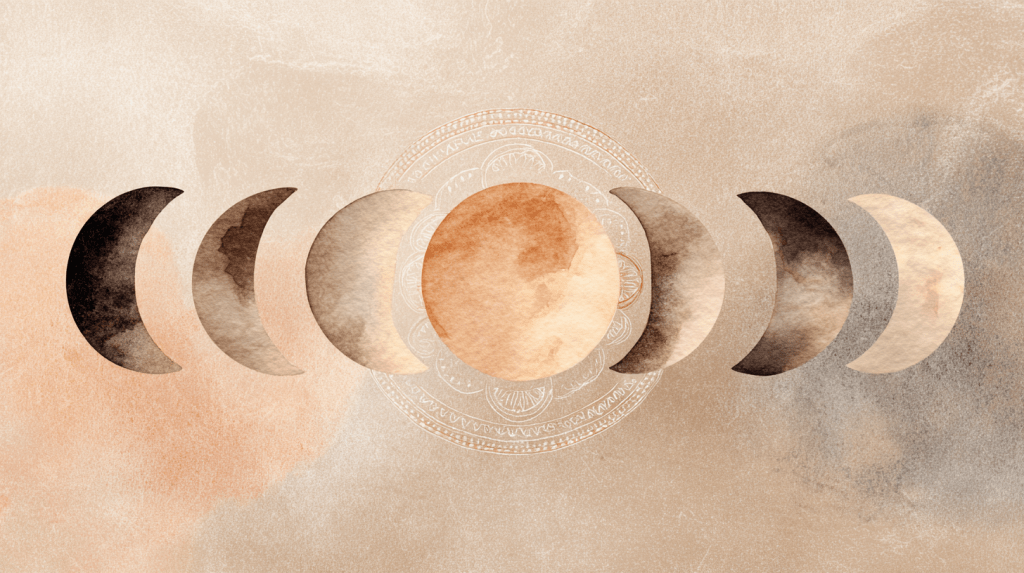
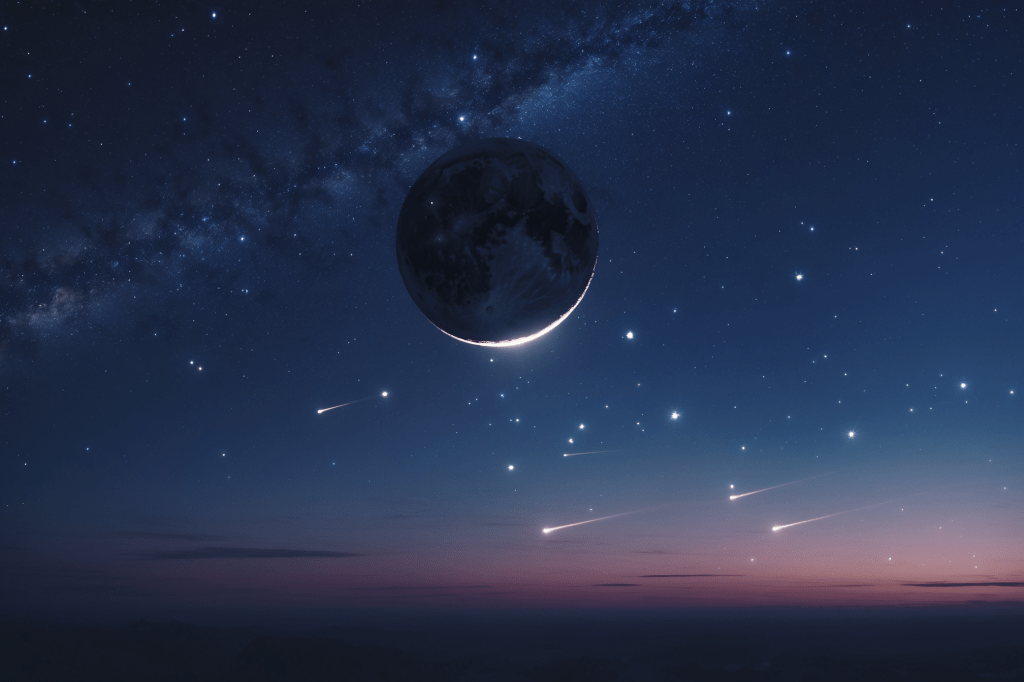
The new moon is a time of darkness and stillness. The moon is there, but unseen.
In self-love, this phase often mirrors moments when you feel low, quiet, or inward. When energy is scarce. When you do not feel inspired to reflect, share, or “do the work.”
Many women struggle here because we have been taught that rest must be earned or justified.
But the new moon does not prove its worth before going dark.
It does not explain itself.
Self-love during the new moon is about permission.
Permission to rest without producing insight.
Permission to pause without a plan.
Permission to be unseen without disappearing.
A gentle question for this phase might be:
What would it feel like to let myself be quiet right now?
The Waxing Moon: Gentle Growth Without Pressure
As the moon begins to grow, light slowly returns.
This phase aligns with curiosity and gentle intention. Not big goals or transformation, but small openings.
In self-love, waxing energy may show up as:
Wanting to try a new practice.
Noticing where kindness feels possible.
Beginning again after a period of depletion.
This is not the time for force.
Growth here is slow and incremental. The moon does not jump from darkness to fullness. It builds light patiently.
Self-love in this phase sounds like:
“I can take one small step.”
“I do not need to rush.”
“I can listen as I go.”
A gentle question for this phase might be:
What feels supportive to explore right now, without obligation?
The Full Moon: Awareness Without Judgment
The full moon brings illumination. Things come into view.
In self-love work, this often looks like heightened awareness. Emotions may feel closer to the surface. Patterns become clearer. Needs speak more loudly.
This is where many women turn on themselves.
They notice what hurts and immediately want to fix it.
They see their struggles and feel ashamed for still having them.
But the full moon does not edit what it reveals. It simply shines.
Self-love during the full moon is about witnessing without judgment.
Letting what is true be seen without deciding what it means about your worth.
Allowing feelings to exist without demanding resolution.
A gentle question for this phase might be:
What is asking to be acknowledged, not solved?
The Waning Moon: Release Without Self-Punishment
As the moon begins to wane, light slowly recedes. This is a time of letting go.
In self-love, waning energy supports release. Releasing expectations. Releasing self-criticism. Releasing roles or habits that no longer feel sustainable.
This is not about self-improvement. It is about softening your grip.
Many women try to release through force. Through harsh boundaries with themselves. Through self-judgment disguised as motivation.
But the moon does not tear its light away. It releases gradually.
Self-love here means allowing yourself to loosen without blame.
You might ask:
What can I set down, even temporarily, to feel a little more ease?

Working With the Moon Instead of Against Yourself
You do not need to track the moon perfectly to work with its wisdom.
This is not about following rules or rituals correctly.
It is about noticing rhythm.
Noticing when you need rest instead of reflection.
Noticing when awareness feels helpful and when it feels overwhelming.
Noticing when growth feels nourishing and when it feels like pressure.
The moon reminds us that there is no single correct way to be in relationship with ourselves.
Some days self-love looks like journaling or meditation.
Some days it looks like going to bed early.
Some days it looks like doing less and expecting less of yourself.
All of it belongs.
A Closing Reflection
If you want to begin relating to self-love more cyclically, you might sit with this question:
If my inner life moved like the moon, what phase am I in right now, and what does that phase need?
You do not need to change anything immediately.
Just noticing is enough.
Self-love does not require constant light.
It does not require progress without pause.
It does not require you to be whole before you are worthy of care.
Like the moon, you are allowed to change.
You are allowed to ebb and return.
You are allowed to be exactly where you are.
And that, too, is part of the healing.

 The Self-Love Scribe Blog